India could grow its fuel in the ocean
The ethanol India blends into every litre of petrol is distilled from thirsty sugarcane and grain. But it doesn't have to be. The same fuel can be brewed from seaweed grown in the sea — no farmland, no freshwater — and Indian scientists have already pulled it off with a salt-tolerant yeast. Here's the idea that could change where our fuel comes from, and why it isn't at the pump yet.

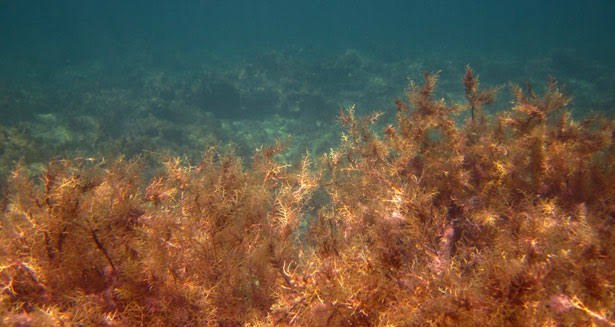
One in every five litres you pump into a car in India is no longer petrol — it's ethanol, alcohol distilled from crops. Right now that alcohol comes from sugarcane and grain grown in fields. But here's the part almost nobody knows: it doesn't have to. The exact same fuel can be brewed from seaweed grown in the sea — no farmland, no freshwater — and Indian scientists have already done it in the lab.
That's the genuinely new idea worth your attention: not that biofuel is thirsty (it is), but that we might be able to grow fuel in ocean water instead of draining rivers for it. India, with a long coastline and a national thirst for ethanol, may be the country with the most to gain. You can stop at any line below and still have the whole story.
The short version
- India blends 20% ethanol into its petrol (E20) — today made from sugarcane and grain.
- Those crops are hugely water-hungry, which is a problem in a water-stressed country. That part isn't new.
- What is new: the same ethanol can be fermented from seaweed grown in salt water — no farmland, no freshwater.
- The catch was always salt, which kills brewing yeast. Indian researchers solved it with a salt-tolerant marine yeast.
- It works in the lab and out-yields land crops on paper — but it isn't cheap enough to reach the pump yet.
The idea: fuel grown in salt water
Ethanol is just fermented sugar. Normally that sugar comes from cane or grain, which means a field, irrigation, and fertiliser. Seaweed is different — it's packed with fermentable sugars, grows fast in the open sea, and needs none of that. Ferment seaweed instead of sugarcane, and you get the same molecule of fuel from the ocean.
Go deeper: why seaweed is such a good raw material
Seaweed is nearly free of lignin, the tough woody polymer that makes land plants hard to break down into sugar — so it's easier to convert than wood-based feedstocks. It also grows remarkably fast and uses ocean space rather than arable land. On paper the productivity is staggering: one widely cited figure puts macroalgae at around 25,000 litres of bioethanol per hectare, against roughly 1,500 for mustard and under 500 for soybeans. Same fuel, a fraction of the land, and none of the freshwater.
Why we'd want to — the freshwater catch
The reason this matters isn't abstract. Today's ethanol carries a hidden water bill: by estimates tied to India's own ethanol roadmap, one litre distilled from sugarcane can take close to 3,000 litres of water once you count what the crop drinks in the field. That's a heavy cost in a country already pumping groundwater faster than it refills.
Go deeper: the size of the bill
Independent water-footprint research lands in the same range — about 2,995 litres of water per litre of Indian sugarcane ethanol. Switching to grain doesn't rescue it; rice-based ethanol can be even thirstier once its irrigation is counted. The water isn't spent at the distillery — it's drunk by the crop months earlier, out in the field, which is why a fuel sold as "green" can quietly carry an enormous water footprint. Seaweed sidesteps the whole equation, because it grows in the water we have most of.
India has already made it work
This isn't a foreign idea India might one day license. Scientists at the Central Salt and Marine Chemicals Research Institute (CSMCRI) in Gujarat have already produced ethanol from Kappaphycus red seaweed — and cracked the one problem that had always made fermenting in salt water impractical.
Go deeper: the marine-yeast breakthrough
Seaweed sap is salty, and ordinary brewer's yeast is poisoned by salt. The usual fix is to strip the salt out first — an expensive desalting step that wrecks the economics. CSMCRI's move was to ferment with a salt-tolerant marine yeast instead, skipping desalting entirely. Their process also yields a valuable seaweed "sap" used as a crop biostimulant, so fuel comes out alongside a second product that helps pay for it. Later work went further, showing that using seawater in the breakdown step actually raises the sugar yield — the ocean helping at both ends of the process.
Why it isn't at the pump yet
So if it works, why is your petrol still blended with sugarcane ethanol? Because "works in the lab" and "works nationwide for less than the alternative" are very different bars — and ocean ethanol has only cleared the first.
Go deeper: the barriers that keep it pre-commercial
- Wet biomass is costly. Harvesting seaweed and getting the water out of it is expensive before you make a single drop of fuel.
- The sugars are stubborn. Seaweed's mix of sugars — especially alginate and mannitol — is hard to ferment fully, so real yields per tonne stay below the theoretical promise.
- Cheap fuel is a brutal market. Advanced (cellulosic) ethanol as a whole has badly underdelivered worldwide, with a trail of cancelled plants. Seaweed sits earlier and harder than that.
- Food and feed pay more. Anything you grow in the sea is usually worth more sold as food, feed, or fertiliser than burned as fuel — so the biomass tends to get diverted there instead.
The bottom line
Growing fuel in the ocean is real, it's Indian, and it neatly answers the one criticism of E20 that never goes away — its water footprint. What it can't yet do is compete on price, which is why it's a lab result and a coastline of potential rather than a pump you can drive to. The interesting question isn't whether India can make ethanol from the sea. It already has. It's whether it can make it cheap enough to matter.
Sources
- Business Standard — "Ethanol beyond E20: why India's clean fuel plan needs a water audit." On the ~3,000 litres of water per litre of ethanol tied to India's blending roadmap.
- Outlook India — "Why India's ethanol revolution is sparking fresh food and water concerns." Context on the E20 rollout and its food and water trade-offs.
- Water Footprint Network — "The water footprint of sweeteners and bio-ethanol" (Report 38). Independent figure of ~2,995 litres per litre for Indian sugarcane ethanol.
- ISAAA / CSMCRI — "Marine yeast converts red seaweed sap into ethanol." The salt-tolerant marine yeast that skips the desalting step.
- Scientific Reports (Nature) — "The utilization of seawater for the hydrolysis of macroalgae and subsequent bioethanol fermentation." Seawater raising sugar yield in the breakdown step.
- CES, Indian Institute of Science — "Bioethanol from macroalgae: prospects and challenges." Per-hectare yield estimates and the barriers keeping seaweed ethanol pre-commercial.
- PublicDomainPictures.net — "Seaweed In Sea." Cover photo by Petr Kratochvil, released as CC0 Public Domain.