The distant strait that sets the price of your day
The Strait of Hormuz is a narrow sea most Indians will never see — but a huge share of the world's oil and gas passes through it, and India buys almost all of its energy. Here's how a threat to that one strait travels, step by step, into your fuel, your kitchen, your loan, and the money your family earns in the Gulf.

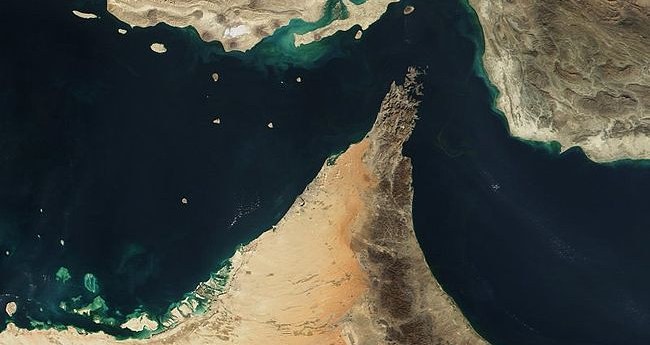
There is a stretch of sea most Indians will never see — a gap about 40 kilometres wide between Iran and Oman called the Strait of Hormuz. It feels about as far from your kitchen as anything can be. And yet, on a bad week, it quietly helps set the price of your whole day: the petrol in your scooter, the gas under your dal, the EMI on your phone, even the money an uncle in Dubai sends home.
Here's the one idea that ties it all together: India doesn't make most of its own energy — it buys it. A huge share of the world's oil and gas sails out through that one narrow strait. So when ships there are threatened, the shock doesn't stay in the Gulf. It travels, step by step, all the way to your plate and your wallet. You can stop at any line below and still walk away with the whole story.
The short version
- The Strait of Hormuz is a ~40 km sea gap through which about a fifth of the world's oil passes.
- India imports close to 90% of its oil. Even after moving supply away from Hormuz, it still pays the world price when the strait is in the news.
- The shock reaches your day in an order: fuel and cooking gas first, then anything a truck carries, then a weaker rupee making imports dearer.
- Staples like rice barely move, because the government cushions them with huge stockpiles and export bans. The pain shows up around the plate, not on it.
- The most Indian part: about 9 million Indians work in the Gulf, and the money they send home is what many families actually live on.
Start here: India buys its energy
Almost everything below flows from a single fact. India digs up only a small part of the oil it burns and buys the rest from abroad — nearly nine litres in ten. When you import that much of the thing that powers your whole economy, a supply scare on the other side of the world stops being foreign news and starts being a number on your bill.
Go deeper: why this one strait matters so much
By the US government's own count, the Strait of Hormuz is the chokepoint for about 20% of the world's oil — roughly a fifth of everything the planet uses, squeezed through a lane a few kilometres wide. India leans on it in two ways. Its oil import dependence is close to 90%, and about half of the natural gas it imports as LNG comes from Qatar and the UAE, sailing out through Hormuz. India has smartly cut its exposure — the government now sources about 70% of its crude from outside the strait. But here's the catch that trips people up: it doesn't matter where your barrel comes from. Oil trades at a single world price, so when Hormuz is threatened and that price jumps, India pays more on every barrel — even the ones from Russia or Africa that never went near the strait.
What reaches your day first — fuel and the kitchen
The closest touchpoint is the thing you already watch: the pump and the gas cylinder. A blockade, or even a serious threat of one, pushes global oil prices up, and that pushes up what you pay for petrol, diesel, and cooking gas.
Go deeper: how one price becomes a hundred prices
The government softens the first hit — it can trim fuel taxes, and the state oil companies smooth pump prices so they don't swing wildly day to day. But that cushion has limits, and it costs the treasury money. The cooking-gas cylinder is the sharpest kitchen hit, since a good part of India's LPG is Gulf-linked. And then diesel does the quiet damage: it moves everything — the truck bringing vegetables to your market, the tempo carrying milk, the delivery bike, the auto you flag down. So even if you never buy a litre of fuel yourself, you feel it second-hand, as slightly dearer tomatoes, a higher auto fare, and a bigger delivery charge. That's the "second wave" of an oil shock, and it reaches almost everyone.
The rupee — a tax that never shows up on a bill
This is the part people underrate. When India's oil bill balloons, the country is spending far more dollars to buy the same energy. That extra demand for dollars weakens the rupee — and a weaker rupee quietly raises the price of everything India brings in from abroad.
Go deeper: what a weaker rupee touches
Think of the rupee as your purchasing power abroad. When it slips, your phone and laptop get costlier, so do many medicines and the raw ingredients India imports to make them, so does a foreign holiday or a child's tuition overseas. India has a strong shield here — the Reserve Bank holds well over $600 billion in foreign reserves and can lean against the fall — but a long shock still leaks through. There's a second twist too. Pricier fuel and food push up inflation, and to fight inflation the RBI keeps interest rates high. High rates mean your home-loan and car-loan EMIs stay heavy. So a strait you can't find on a map can, months later, show up in your monthly loan payment.
Why your rice barely moves — and what does
Here's the reassuring bit, and the surprising one. The staple grain on your plate — rice, wheat — is one of the last things to move in a shock like this, because India has built a machine specifically to keep it steady.
Go deeper: the buffers, and where the pain actually lands
India stores enormous public stockpiles of grain, buys from farmers at a fixed support price, and hands out cheap rations through the public distribution system. And when food prices even threaten to climb, the reflex is to slam the export door shut — exactly what happened in 2023, when India banned most non-basmati rice exports to keep home prices calm. So the rice itself stays cheap. The pain shows up around it instead — in the things India genuinely depends on the world for, like edible oil and pulses, and in fertiliser. India is the world's largest fertiliser importer, and the Gulf supplies roughly 40% of the world's traded urea; even India's home-made urea leans on imported gas. That raises the cost of the next crop — but again, the government usually swallows it as a subsidy rather than letting it hit the farm. Net effect: your plain rice holds; your cooking oil, your dal, and the taxpayer's bill are what stretch.
The most Indian part of the story — the Gulf
A Western explainer would stop at oil and prices. For India, there's a channel that's far more personal, and for millions of families it's the one that matters most: the people. A crisis at Hormuz means trouble in the exact region where a huge Indian workforce lives and earns.
Go deeper: nine million people, and the money they send home
Around 9 million Indians work in the Gulf — the UAE, Saudi Arabia, Qatar, Oman, Kuwait — driving trucks, building towers, staffing hospitals and shops. They are a big reason India pulls in more remittance money than any country on earth, a record $135 billion in 2024–25, with the Gulf alone sending home around 40% of it. In states like Kerala, and across much of the north, that money isn't spare change — it pays school fees, builds houses, funds weddings and hospital bills. A war right on top of those jobs threatens all of it at once: the salaries, the workers' safety, and sometimes it forces costly evacuations. For those households, the price of petrol is a footnote. The real question is whether the monthly transfer from abroad keeps coming.
The bottom line
India is built to take a short punch. Deep dollar reserves, mountains of grain, fuel-tax room to cushion the pump, and oil now sourced mostly away from the strait all mean a brief scare mostly looks like pricier fuel and gas, a jumpy stock market, and a nervous rupee — with your rice sitting calm through all of it. A long closure is the harder story: the buffers strain, inflation spreads, EMIs bite, and the hit to Gulf jobs and family incomes turns real. Reassuringly, a full blockade has never lasted, partly because Iran needs the strait for its own exports too.
So if you want the whole thing in one line: the rice on your plate is almost the last thing to move — but nearly everything around it moves first. The order you'd feel it is cooking gas and fuel, then anything a truck carries, then the rupee and imported goods, then your EMIs and savings, and — for millions of families — the job and the money coming home from the Gulf. A narrow sea you'll never visit, threading its way into an ordinary Indian day.
Sources
- U.S. Energy Information Administration — "Strait of Hormuz is chokepoint for 20% of world's oil." The share of global oil that passes through the strait.
- OilPrice — "India's oil import dependence climbs to nearly 89%." How much of its crude India buys from abroad.
- India Shipping News — "Half of India's LNG imports come from Qatar and UAE, relying on the Strait of Hormuz." India's gas exposure to the strait.
- Petroleum Ministry (via NewsOnAir) — "India secures 70% of crude oil imports outside Strait of Hormuz." The diversification that softens, but doesn't remove, the risk.
- IFPRI — "How fertilizer policies could exacerbate Hormuz price shocks." The Gulf's ~40% share of world urea and India's place as the largest importer.
- Forbes — "India's rice export ban could drive global food prices even higher." The 2023 non-basmati export ban used to keep domestic prices calm.
- NewsOnAir — "Remittances by Indians working abroad scale record high of $135 billion in FY25." The scale of money flowing home.
- Arab News — "Despite small diaspora share, Gulf-based Indians send home 40% of remittances." How much of that money comes specifically from the Gulf.
- NASA / Flickr — "Strait of Hormuz." Cover satellite image by Jacques Descloitres, NASA, licensed CC BY 2.0.